Bath · A practical guide
How to Compare Bath Towels by Absorbency, Weight, and Drying Time
A towel can feel satisfyingly substantial in the shop and still take until evening to dry on a crowded rail. Another, thinner one may do its work quickly, then be ready again before the next shower. To choose well, look beyond the first touch: weight, fiber, weave, and the conditions of your bathroom all help determine how a towel performs in ordinary life.
There is a small ceremony to a new bath towel. It is folded over an arm, pressed between fingers, perhaps lifted to the face for a private test of softness. In the store, the towel is dry, perfectly arranged, and enjoying the advantages of flattering light and abundant shelf space. At home, it will meet a damp bathroom, a hurried morning, a towel bar already claimed by someone else, and the recurring question of whether it is dry enough to use again.
That gap between the showroom and the bathroom is where towel comparisons become useful. Absorbency matters, but it is not the only measure. Weight can suggest how a towel feels and how much material it contains; fiber and construction influence how it takes up water and releases it; drying time depends on both the textile and the room in which it hangs. The best choice is not necessarily the thickest or the quickest-drying towel. It is the one whose compromises suit your habits.
Start, then, not with a promise of hotel-like plushness, but with a practical inventory: How often will this towel be used? How many people share the bathroom? Does it have a bar or only a hook? Is the room humid, well ventilated, or prone to staying damp? The answers make the labels on a towel more legible.
What towel weight, or GSM, actually tells you
Towel weight is often expressed as GSM, short for grams per square meter. It describes the mass of the fabric over a given area. In broad terms, a higher GSM towel tends to feel denser and more cushioned, while a lower GSM towel is often lighter and less bulky. This is a useful point of comparison, not a verdict on quality.
A higher number can mean more cotton loops, more fiber, or a construction that feels thick and enveloping. That can make a towel pleasant to wrap around yourself after a bath. It can also mean that the towel holds more water, takes longer to dry, and occupies more room in the washing machine and linen cupboard. The luxurious heft has a practical side: when wet, it is heavier still.
Lighter towels are generally easier to handle and may dry faster because there is less material to dry. They can be convenient for shared bathrooms, travel, warm climates, or households that do several loads of laundry a week. But lightness by itself does not guarantee quick drying or good absorbency. A tightly woven or poorly ventilated towel may stay damp, while a lighter towel made with an open, efficient construction can release moisture readily.
GSM ranges are commonly used as a rough guide, though there is no universal boundary that makes one towel “light” and another “heavy.” Retailers may group towels differently, and two towels with similar GSM can feel unlike each other because their fibers, pile height, and weave differ. Whenever possible, treat the number as a clue to likely heft, then check the construction and care information. The hand can confirm a first impression; it cannot tell you how quickly the towel will dry after three consecutive showers.
It is also worth remembering that thickness and absorbency are related but not interchangeable. A plush towel may have a deep pile that catches and holds water, but a soft finish or fabric treatment can affect how readily the fibers take in moisture. A towel that feels thick may be comfortable without being the best match for someone who needs it to dry quickly between uses.
Absorbency: the towel’s first job
Absorbency is the capacity of a towel to take moisture from skin and hold it within its fibers and loops. For most bath towels, cotton is the familiar reference point: it is widely used, comfortable against the skin, and available in many weights and constructions. Yet “cotton” alone does not explain how a particular towel will behave. Fiber length, yarn, pile, finishing, and laundering all have a part to play.
In a terry towel, the small loops create surface area and spaces that can take up water. A generous, well-made pile can feel soft and absorbent, though the same abundance of loops adds weight and can slow drying. Shorter or lower loops may give the towel a less cushioned feel but can make it easier to wash, handle, and hang. Neither approach is inherently superior; the right balance depends on whether you prize a plush wrap or a towel that is ready for another turn without much waiting.
Absorbency can also change when a towel is new. Some towels are finished with softeners or other treatments that make them feel inviting on the shelf but may temporarily reduce their willingness to take up water. A first wash, following the care label, often helps remove manufacturing residues and allows the fabric to settle into its normal performance. It is sensible to avoid assuming that an initial lack of absorbency is permanent—or to try to fix it with aggressive washing, bleach, or excessive detergent, which can harm fibers.
More detergent does not necessarily mean a cleaner or more absorbent towel. Residue can build up in fabric, leaving it less fresh to the touch and interfering with its ability to take up moisture. Use the amount recommended for the load and detergent, and make sure the washer is not so crowded that the towels cannot move freely. Fabric softener may leave a coating that changes the feel and performance of absorbent textiles; if absorbency is a priority, consult the towel’s care instructions and consider using it sparingly or not at all.
When comparing towels, look for clear information about fiber content and construction rather than relying on broad claims such as “ultra-absorbent.” If possible, feel the surface and notice whether the loops are even, whether the towel seems dense without being board-like, and whether the edges are finished securely. These observations do not substitute for testing, but they help distinguish considered construction from a sales adjective.
Why drying time changes the calculation
A towel is not finished with its work when it has dried a person. It must dry itself. This second task is easily overlooked, perhaps because it happens after the bathroom has been vacated. Yet a towel that remains wet for hours can feel unpleasant at the next use and may become musty if it is repeatedly folded or left bunched while damp.
Drying time is affected by the amount of water the towel holds, the distance between its fibers, how widely it can be spread, and the air moving around it. Temperature matters, as do humidity and ventilation. A thick towel on a crowded hook in a poorly ventilated bathroom has little chance of drying as quickly as a lighter towel hanging fully open in a warm, breezy space. The same item can seem quick-drying in one home and inconveniently damp in another.
This is why a towel’s GSM cannot tell the whole story. Higher-weight towels often retain more water because they contain more material, and may therefore take longer to dry. But a lighter towel can still dry slowly if its construction is dense or it hangs folded over itself. A well-designed towel with a balanced pile and room to breathe may outperform a lighter, less thoughtfully constructed one. In daily use, the drying arrangement can be as important as the fabric label.
Consider the household rhythm. If one towel is used by one person and has a wide rail to itself, a heavier towel may be entirely practical. If several people share a bathroom and towels are used repeatedly through the day, faster turnover can matter more than the enveloping feel of a thick pile. In a small apartment, a towel that dries promptly on a hook may be more satisfying than one that needs a broad bar and several hours of favorable air.
For better drying, shake a towel out after use and hang it open rather than leaving it folded into a thick bundle. Give it enough space for air to circulate; avoid stacking damp towels on one another. Ventilation after a shower helps lower the room’s humidity, and periodic washing keeps residues from accumulating. These modest habits can improve performance without requiring a new towel or a more elaborate laundry routine.
Fiber and weave: the texture behind the label
Fiber names are useful starting points, but they do not explain every sensation. Cotton towels are common because cotton can combine softness, absorbency, and durability. Different cottons and yarns, however, can produce a wide range of finishes. A towel made with longer fibers may be spun into smoother yarn, while the pile, density, and finishing determine much of what the user notices. It is more helpful to assess the whole construction than to treat a single fiber phrase as a guarantee.
Some towels use blends or alternative fibers that may be marketed for softness, moisture management, or faster drying. Their actual performance depends on the proportion of each fiber and how the fabric is made. If a product description makes a specific claim, look for concrete details—fiber percentages, care directions, and construction—rather than assuming that a material name alone promises a particular result.
Weave and pile shape the towel’s surface and handling. Traditional terry loops are designed to provide a plush, absorbent face. Waffle or other textured constructions may feel lighter and less bulky, and can be easier to hang in a compact space. A flatter towel may be a practical choice where quick drying and storage matter, though it may not deliver the same cushioned sensation as a thick terry bath towel. The distinction is less a contest than a question of preference and setting.
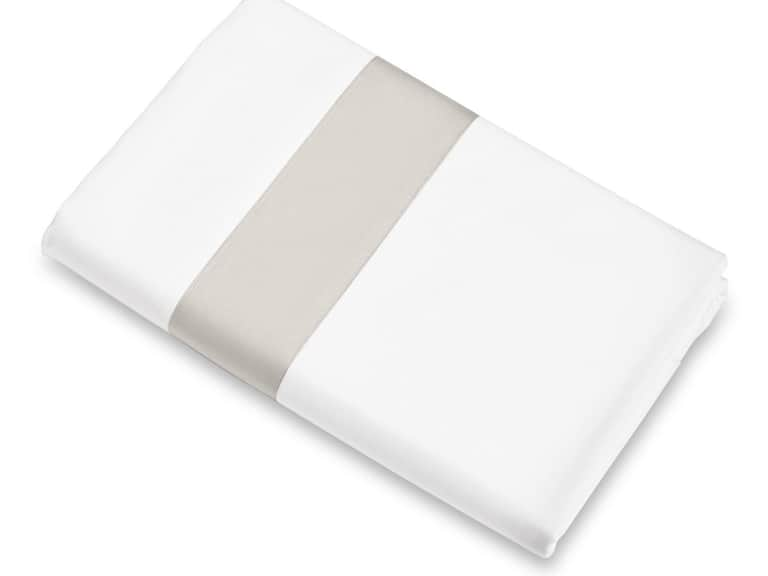
Details at the edges matter, too. Hems and borders affect durability, and a towel that is repeatedly washed benefits from secure finishing. A decorative band may give the towel a tailored appearance, but it does not necessarily indicate greater absorbency. Check that the design does not come at the expense of a useful, comfortable surface, and follow the manufacturer’s directions for washing and drying.
A practical comparison, without a laboratory
When shopping in person, compare towels of similar size. A larger towel naturally contains more fabric and may feel heavier, so size can obscure a comparison based on GSM or hand feel. If the label gives a weight, note it; if it does not, use the towel’s dimensions, fiber content, and construction as context. Pick it up, fold it once, and notice whether it feels substantial in a way you enjoy or simply cumbersome.
Run your fingers lightly over the pile. Even, resilient loops can suggest a well-finished surface; sparse patches, loose threads, or rough edges deserve a closer look. Press the towel gently between your hands. Does it spring back, or does it feel stiff and packed? A tactile test is imperfect, but it can reveal the difference between soft and merely heavy. If you are shopping online, read specifications carefully and search the care instructions before deciding. Reviews can be informative when they describe repeated use and laundering rather than only the first impression.
At home, a simple trial can answer questions the label cannot. Wash a new towel according to its instructions, then use it normally. Notice how it absorbs water, whether it feels comfortable against skin, and how long it takes to dry in the place where it will actually hang. Pay attention over several washes: early softness can change, and a towel’s real value becomes clear through repetition. This is not a formal test, but it is a more honest one than judging a towel in a perfectly dry shop.
For a useful mental comparison, keep three questions in view:
- How does it feel? Consider softness, pile, warmth, and the weight of the towel when dry.
- How does it absorb? Look at the fiber and construction, then judge its performance after the first wash.
- How does it dry here? Account for your bathroom’s ventilation, hanging space, and frequency of use.
The answers may not point to a single winner. A family might choose lightweight towels for everyday use and keep a heavier one for a slower, more comfortable bath. Someone with a well-ventilated bathroom may welcome a plush towel; someone whose bathroom has no proper rail may prefer a thinner style that can hang freely from a hook.
Care is part of performance
Even a carefully chosen towel can lose its appeal if it is consistently washed or dried in ways that strain the fibers. Start with the care label. Wash towels at the recommended temperature, avoid overloading the machine, and use a measured amount of detergent. A crowded washer can leave items inadequately rinsed, while excessive detergent may contribute to residue. Neither is likely to make a towel more absorbent.
Drying instructions vary. A tumble dryer can restore softness, but excess heat may wear fibers over time. Line drying uses no dryer heat and may suit some households, though towels can feel stiffer when dried outdoors or in still air. The goal is not to follow a universal ritual but to use the method permitted by the label and suited to the fabric. Most important, do not put a towel away while it is still damp.
After each use, spread the towel out to dry. Wash it regularly according to your household’s needs and the manufacturer’s guidance. If it develops a lingering odor, first check whether it is drying fully and whether the wash cycle is rinsing effectively. A towel that is perpetually damp may not need a different fragrance; it may need more air. Proper care can extend useful life and preserve a comfortable hand, but no towel is impervious to wear. Eventually, loops thin, edges fray, and absorbency declines.
Match the towel to the routine
For a warm, humid bathroom with little hanging space, a lighter towel with a less bulky construction may be easier to live with. For someone who prefers a cushioned wrap and has good ventilation, a heavier cotton terry towel may be welcome. A shared bathroom calls for attention to turnaround time and storage; a guest bathroom may place more emphasis on a comfortable first impression. None of these choices is a matter of virtue. A towel is a household tool, and its best qualities are the ones that make it useful in the household that owns it.
It can be helpful to think in terms of a trade-off rather than a ranking. More weight may mean a more substantial feel, but often brings more water retention and longer drying. A lighter build can ease laundry and storage, though it may feel less plush. Dense loops can offer a soft, absorbent surface, while open or flatter constructions may hang and dry more readily. Fiber and finishing can shift each balance, so the label should be read as a collection of clues rather than a final judgment.
When in doubt, choose a towel that suits the conditions you have, not the bathroom you imagine having. A towel that needs a large rail is not a practical quick-drying towel if your only option is a small hook. A thick towel that remains damp until the next morning may be less comfortable in practice than a lighter one that is ready after a few hours. Conversely, if a towel dries fully and you love the way it feels, there is no reason to reject it simply because a lighter option exists.
The short answer
GSM is a helpful way to compare towel weight, but it does not measure absorbency or drying time by itself. Fiber, yarn, pile, finishing, laundering, and the bathroom’s airflow all influence what happens after a shower. Heavier towels commonly feel plusher and may hold more water; lighter towels are often easier to handle and may dry faster. Those are tendencies, not guarantees.
Choose by considering the whole routine: how the towel feels, how readily it absorbs, how long it takes to dry where it will hang, and how much care it asks of you. A towel need not be the plushest object in the linen cupboard to be the most useful. Often, the best one is simply the one that feels right at the moment it is needed—and is dry again when it is needed next.
Frequently asked questions
Does a higher GSM towel absorb more water?
A higher GSM generally indicates a heavier, denser towel and can suggest greater capacity to hold water. It does not guarantee better absorption. Fiber, pile construction, finishing, and care also affect how readily a towel takes up moisture.
Are lightweight towels always quick-drying?
No. Lower weight can make drying easier, but construction and airflow matter. A lightweight towel bunched on a hook in a humid room may stay damp, while one spread out in a ventilated space can dry more quickly.
How can I help a bath towel dry faster?
Shake it out after use and hang it fully open with room for air to circulate. Improve bathroom ventilation where possible, avoid leaving damp towels folded or piled together, and follow the care label when washing and drying.
Why might a new towel seem less absorbent than expected?
Finishing residues or softeners can affect initial absorbency. Wash the towel according to its care instructions before judging its everyday performance, and avoid excessive detergent or fabric softener if absorbency is a priority.